It’s no small irony that Gladys Knight’s career took off with a song about putting one’s showbiz aspirations aside and heading home. “Midnight Train to Georgia,” (with stellar backup vocals by the Pips), came after years of frustration. But when it landed, the world came to recognize Knight as one of the greatest singers in pop history. As an Atlanta native, she was also uniquely qualified to deliver the song’s lyric—one of many southern odysseys undertaken in this issue.
Also, Black music in the American South is assessed with all that entails. From the folk singers who challenged Jim Crow to the Memphis soul purveyed by the Stax factory (much of it backed by an integrated house band), from the heartbreaking legacy of “Strange Fruit” to the groundbreaking hip-hop of the “Dirty South,” from a checkered story of musical entrepreneurship to the Black origins of country music, we hope to offer a suitably diverse (and unflinching) portrait of the songs, culture and political ferment of the region. In these times, more than ever, these stories must be told.
It’s no small irony that Gladys Knight’s career took off with a song about putting one’s showbiz aspirations aside and heading home. “Midnight Train to Georgia,” (with stellar backup vocals by the Pips), came after years of frustration. But when it landed, the world came to recognize Knight as one of the greatest singers in pop history. As an Atlanta native, she was also uniquely qualified to deliver the song’s lyric—one of many southern odysseys undertaken in this issue.
Also, Black music in the American South is assessed with all that entails. From the folk singers who challenged Jim Crow to the Memphis soul purveyed by the Stax factory (much of it backed by an integrated house band), from the heartbreaking legacy of “Strange Fruit” to the groundbreaking hip-hop of the “Dirty South,” from a checkered story of musical entrepreneurship to the Black origins of country music, we hope to offer a suitably diverse (and unflinching) portrait of the songs, culture and political ferment of the region. In these times, more than ever, these stories must be told.

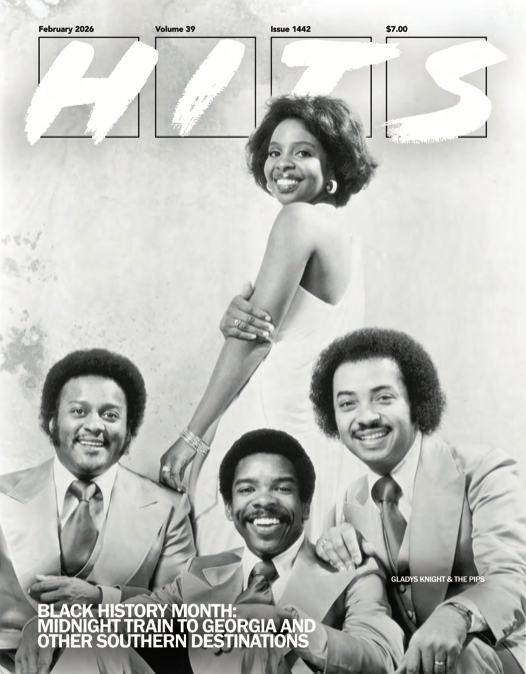 Image 1 of 1